Opening Bank Accounts in Hong Kong and Macau in 2026: Appointment Pitfalls, HSBC Activation, and Virtual Banks
A fact-checked 2026 guide to opening bank accounts in Hong Kong and Macau: appointment pitfalls at BOCHK and ICBC Asia, a CCB Asia branch opening, HSBC pre-appl
What this guide covers
This guide reconstructs a mid-November 2026 trip to open personal bank accounts in Hong Kong and Macau, based on a reported user experience, and checks the parts that can be checked against official pages and tariff documents. It does not invent hands-on testing. Branch decisions, appointment slots and promotions change; rely on the official website, app and staff instructions on the day you go.
Banks covered: Bank of China (Hong Kong), ICBC (Asia), China Construction Bank (Asia), HSBC Hong Kong, Hang Seng Bank, ZA Bank, Ant Bank (Hong Kong) and Ant Bank (Macau), plus a brief note on the high threshold reported for Well Link Bank in Macau.
Opening an account is not residency or work authorisation. Traditional banks often ask about purpose, source of funds and ties to Hong Kong. A branch that declines a tourist visit is making a decision on that occasion — it is not the same as an official rule that visitors can never open an account.
A related, but different, topic is HSBC Hong Kong’s source-of-funds declaration for some mainland investment clients, already covered in guide 105.
Before you go
- Documents. Typical items include a mainland Chinese ID card, an Exit-Entry Permit for travelling to and from Hong Kong and Macau, recent bank statements, proof of address (a bank, utility or government letter from the mainland or Hong Kong), tax or social-insurance records, and an employment letter. Lists differ by bank. Investment services often also need an original address proof issued within three months and showing your name.
- Calls and SMS. Before you travel, confirm with your mainland mobile operator that the number can receive calls and texts from Hong Kong and Macau. China Mobile and other operators offer a block on international and Hong Kong/Macau inbound calls; in some regions it has been switched on by default. You can usually turn it off via 10086 or the operator’s app; codes can differ by province. Banks use these channels for pre-approval, one-time passwords and appointment notices.
- Entry/exit record. About half an hour after entering Hong Kong, you can use the National Immigration Administration’s “Immigration 12367” mini program in WeChat or Alipay, complete identity verification, and download a PDF of your entry/exit record. Keep the original filename when you upload it to a bank. An official explainer of the channels is on the Guangzhou Public Security Bureau site.
- Cash and fees. If you plan to deposit cash to meet a balance requirement, bring Hong Kong dollars yourself. HSBC’s below-balance fee follows the official tariff; it is not as simple as “keep HK$10,000 in the account at all times and the fee is waived.”
- Do not borrow an address. Do not use a third-party mailbox or “address verification” service to skip a bank’s correspondence-address rules or to avoid a card-mailing fee. That can breach the account terms.
- No referral codes. This guide does not include invitation or referral codes. Welcome gifts, cash rebates and share promotions in Macau are time-limited; follow the official app and in-branch terms.
Immigration at Futian and the landing slip
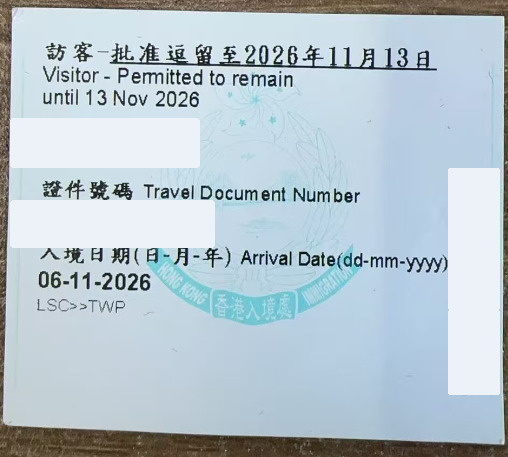
On a weekday, the Futian Checkpoint often has students crossing to school in Hong Kong. The mainland exit e-gates typically scan the travel permit, then capture a thumbprint and face; there is usually no paper ticket on the way out. Hong Kong entry uses a similar two-gate process, and then prints a visitor landing slip (often called the “white slip”) showing visitor status and the date you may remain until. Keep it.
One reported trip entered Hong Kong on 6 November 2026, with permission to remain until 13 November 2026. Your own dates are those printed on your slip.
Bank of China (Hong Kong)
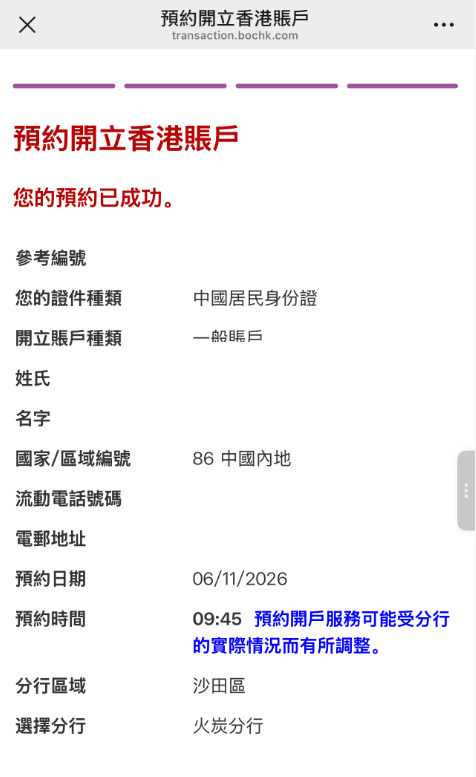
BOCHK offers an official appointment form to open a Hong Kong account, and appointments are also available through channels such as the “BOCHK WeBank” WeChat service. A reported user experience is that slots are released about seven working days ahead (excluding weekends) at midnight. This guide did not find a fixed “seven working days” rule in official terms; check which dates the booking page actually offers.
That trip booked 6 November 2026 at 09:45 at the Fo Tan branch in Sha Tin, for a general account, with a Chinese resident ID card.
In the reported experience, both the Fo Tan branch and the nearby Sha Tin branch declined the application after asking about purpose. Reasons given included that mainland cards were already convenient, interest-rate comparisons, a tourist visit, and not working in Hong Kong. Showing mainland account balances did not change the outcome. These were branch decisions on the day. Staff at the Bank of China Tower branch were more helpful, but afternoon ticket numbers were already high and the account was not opened that visit.
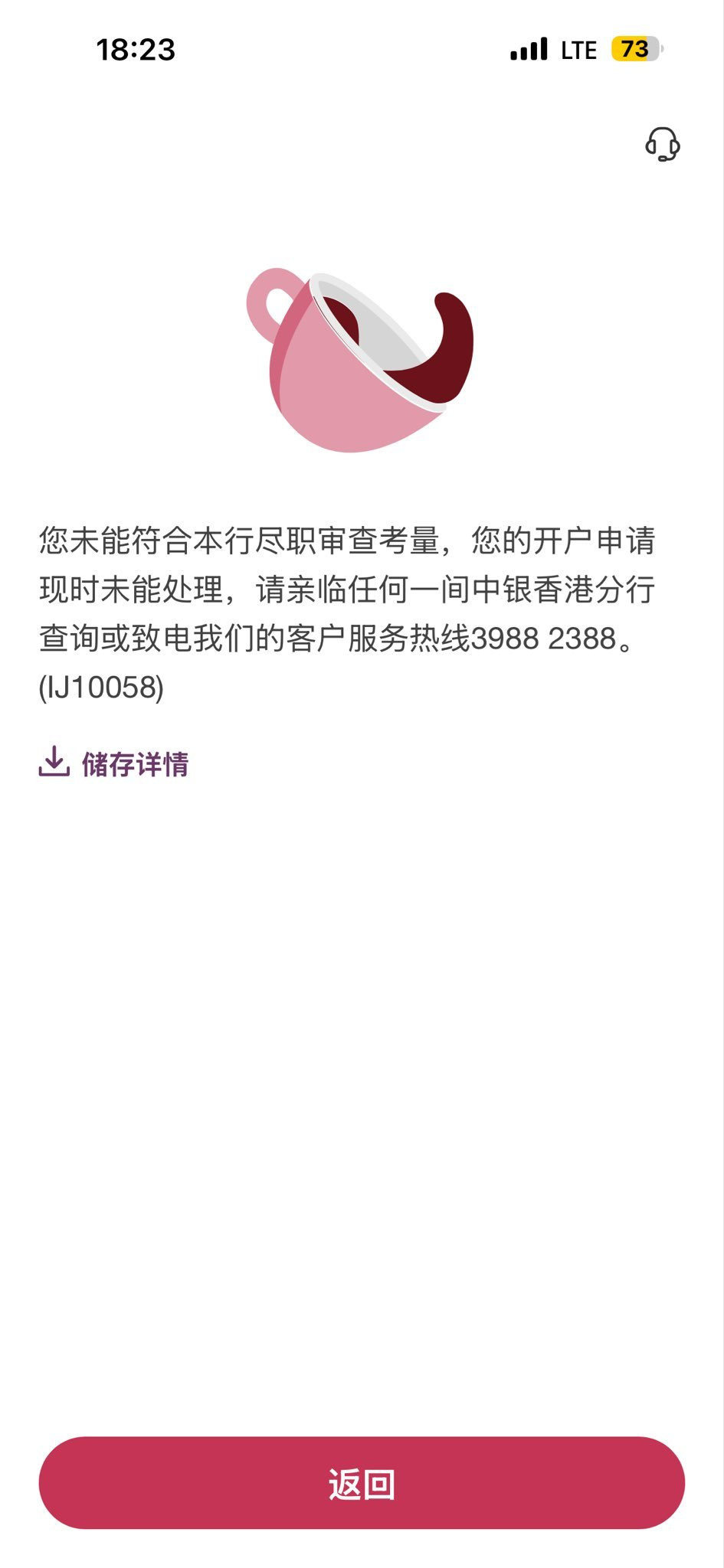
An online application then showed that the request could not be processed because it did not meet the bank’s due-diligence considerations, and suggested visiting any BOCHK branch or calling 3988 2388. Further online attempts on the same trip had the same result.
Standards vary by branch and by period. One refusal is not a permanent ban from the whole bank. If you still want to try, consider another branch, prepare a clear purpose and documents, and accept that you may be declined again.
ICBC (Asia)
ICBC (Asia) often uses the mobile-banking “new customer branch account opening” flow for pre-approval, then completes the account at the booked branch. The SMS lists documents to bring, such as a mainland ID card, an Exit-Entry Permit, evidence of securities, investments or insurance, and a mainland mobile number with roaming enabled. Investment services also typically need an original address proof issued within three months and showing your name. The branch has the final say.
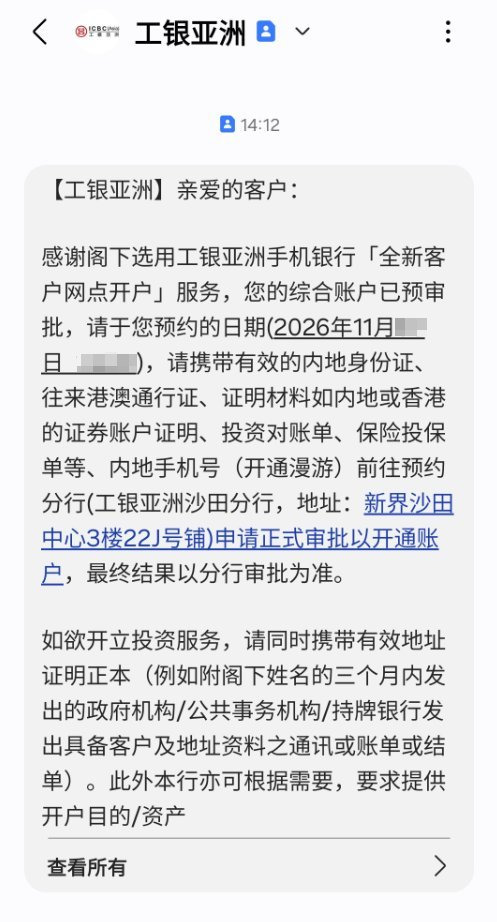
On that trip the booked Sha Tin branch declined the application after questions about work, family, children in school and insurance in Hong Kong, citing a personal tourist visit. That was a decision at that branch on that day.
The appointment record itself needs more care. According to the reported experience, once a mobile appointment has passed pre-approval, even a branch cancellation may leave the applicant tagged as a customer of that branch. A video teller machine (VTM), for example at a metro station, may then refuse to take the case. The official customer-service number is +852 2189 5588. The explanation given on that trip was that a mobile appointment record usually cannot be deleted or changed, and that pre-approval already creates a branch-channel account waiting to be activated.
If your plan is to use a VTM rather than a particular branch, do not make a mobile appointment that binds you to a branch first. If you have already booked, confirm your status with official customer service; do not assume that “cancelling the appointment” erases the record. This is reported user experience. This guide did not independently test a VTM.
China Construction Bank (Asia)
CCB Asia lets you book branch services on its website and also offers remote “e-account” opening in the app. Whether your documents and purpose are accepted depends on the page and the branch. A reported user experience is that branches such as Tsim Sha Tsui usually expect an appointment and may turn away walk-ins.
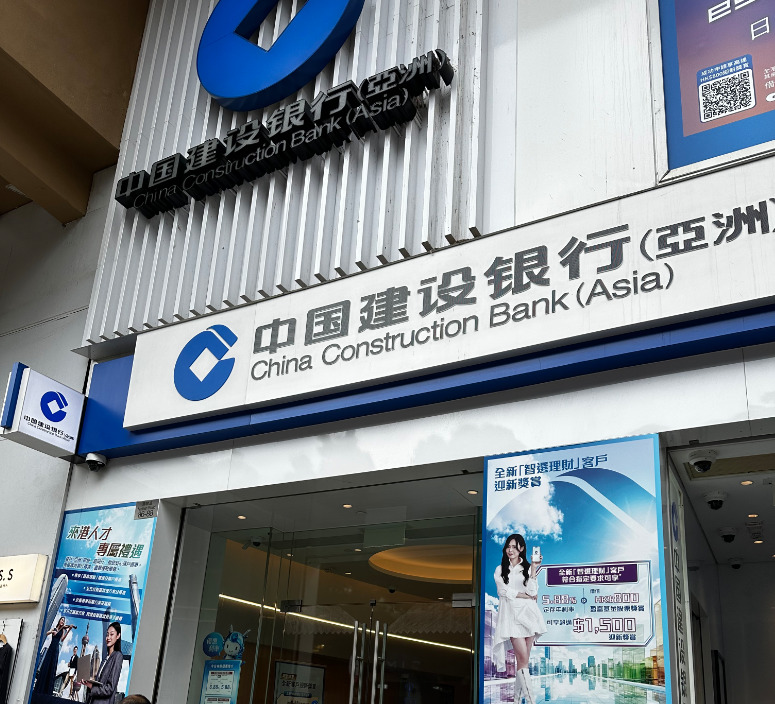
On a Saturday morning at the Tsim Sha Tsui branch, the reported visit went as follows: a booked ticket, a form, a stated purpose of savings and wealth management, a check of ID and paper statements plus work and income, a supervisor review and stamp, ordinary mail for the card, and a short app walkthrough. The service was described as straightforward and professional.
One reported offer was that placing a HK$50,000 three-month time deposit within a month of opening could support a credit-card application. That was a branch or campaign term at the time, not a standing official rule verified for this guide. Ask the branch or check the official application page.
HSBC Hong Kong
HSBC offers a mainland pre-application, then activation in Hong Kong in the HSBC HK app. The usual official wording is that, once pre-application is approved, you have a deadline stated in the SMS (often 90 days) to arrive in Hong Kong and activate with a reference number in the app, generally without visiting a branch. You will need to upload an entry/exit record and should use the latest app version.
Pre-applying is useful because a decline still leaves time to book a branch or try another bank. If you only apply after you have arrived and are then declined, there is less room to change plans the same day.
Processing times vary. Some applications receive a confirmation SMS in about two hours; others go into a longer review, and some are declined. Do not treat another person’s timing as a promise to you.
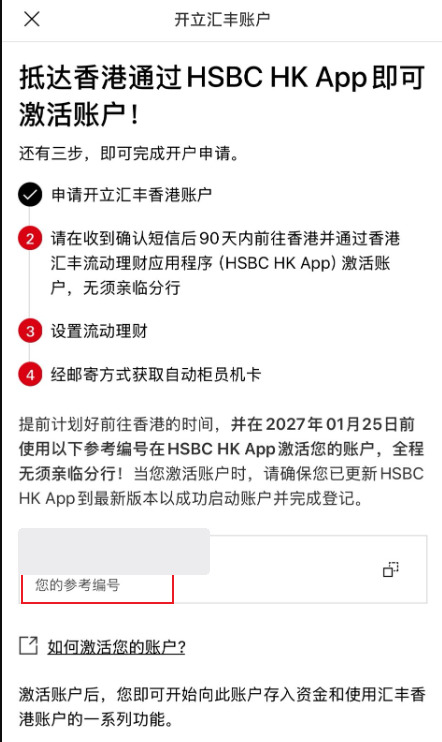
You can update your correspondence address in the app, often by submitting a romanised address first and then a Chinese address. One reported experience is that the physical card is produced in Zhuhai and mailed by EMS to the Chinese address. Follow the app flow on the day.
The below-balance fee is more precise than “keep HK$10,000 in the account.” HSBC Hong Kong’s Bank Tariff effective 1 August 2026 says that for non-HKID holders who open an account on or after 1 January 2026, HSBC One and similar integrated accounts are assessed on the average Total Relationship Balance (TRB) over the last three months: HK$10,000 or above is waived; below HK$10,000 incurs HK$100 per month. The fee is waived for HKID holders, and for non-HKID holders who opened an account before 1 January 2026. In that tariff, the Personal Integrated Account line is also waived. The monthly fee applies to each integrated account. Depositing HK$10,000 in cash on day one does not by itself mean the three-month average TRB test has already been met. Use the official tariff and your own statements.
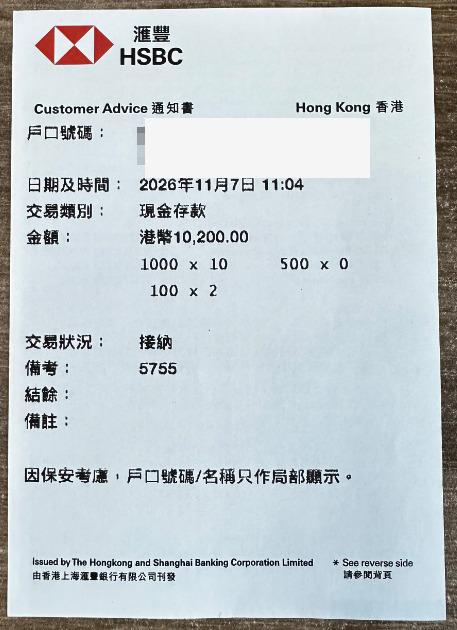
On that trip, Hong Kong dollars were exchanged before departure, and HK$10,200 was deposited at an HSBC ATM without a card on 7 November 2026 after activation.
A reported Sha Tin branch visit completed a signature catch-up on a staff tablet with an SMS code, without waiting at a teller. That was the arrangement at that branch on that day.
If you later become an HSBC Hong Kong investment client, you may also see a source-of-funds declaration. See guide 105.
Hang Seng Bank
Hang Seng offers mobile account opening. One reported experience is that the online application itself was straightforward, but an iPhone failed to read the Exit-Entry Permit over NFC about 30 times, even though the same document had just worked at ZA Bank the same day; it finally scanned after many more attempts. This is not an official incident report, but similar NFC trouble has been mentioned by more than one person. Consider a backup phone and allow time to retry.
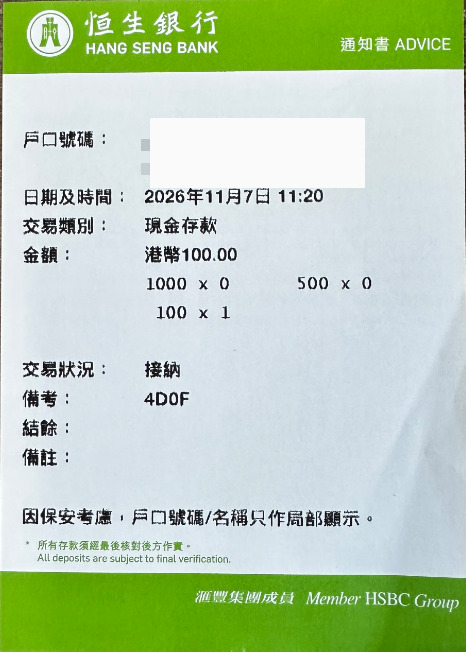
To avoid leaving the account empty, that trip deposited HK$100 in cash at a Hang Seng ATM without a card.
On physical cards, one report is that the default is a debit card mailed by EMS from Zhuhai, and that an ATM card could be posted if requested from customer service before May 2026, but after that might only be collected at a Hong Kong branch. This guide did not find a public Hang Seng page stating a May 2026 cut-off for posted ATM cards. Confirm with customer service and official information.
Do not treat “Hang Seng charges no management fee” as true for every package. Check the Hang Seng personal service charges. A standard Integrated Account and upgraded packages such as Prestige or Preferred Banking have different thresholds and fees. Hang Seng is a member of the HSBC Group, so documentation and reviews may feel similar, but the two banks still have separate accounts and tariffs.
ZA Bank
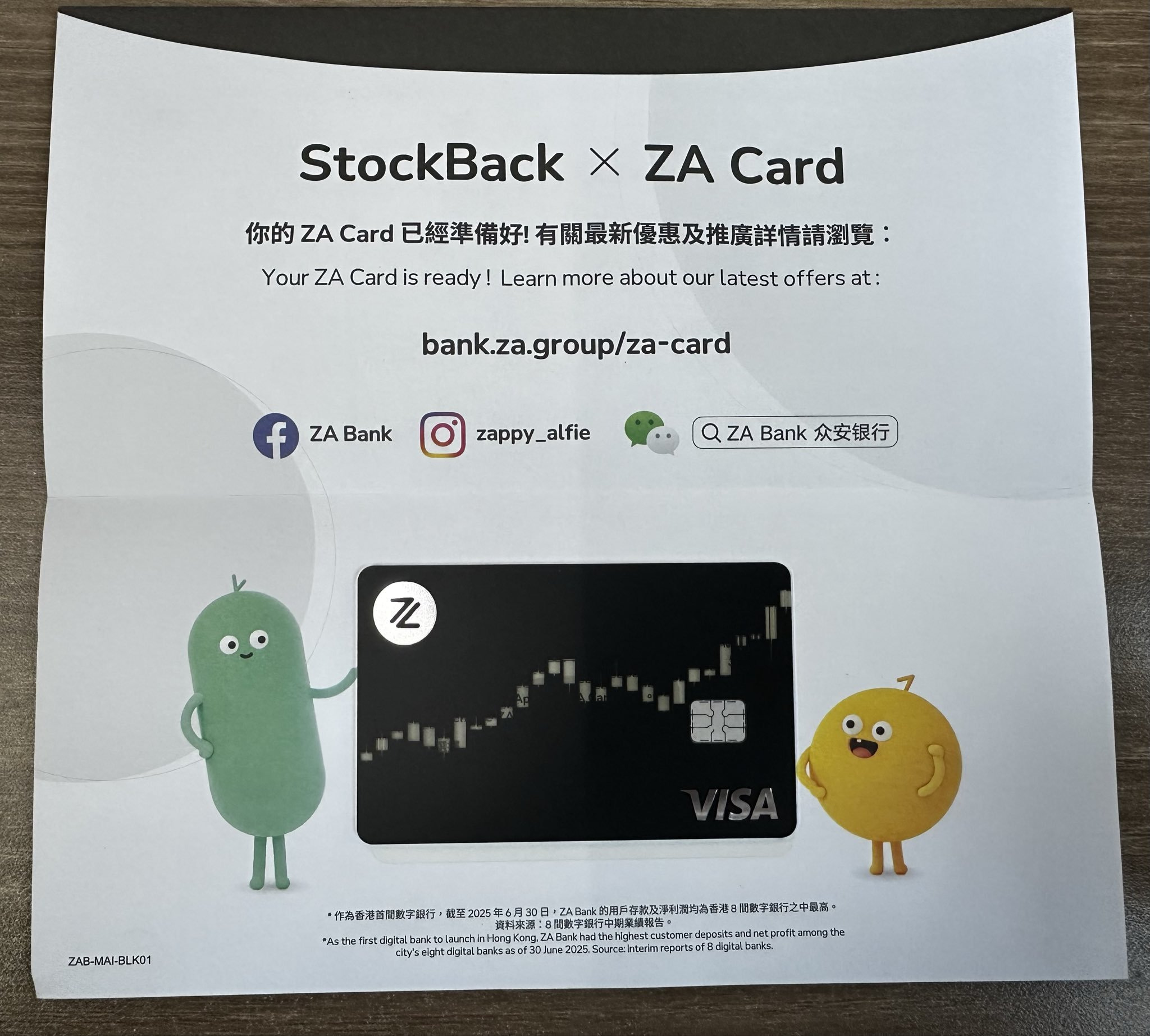
ZA Bank is a Hong Kong virtual bank and can be opened in the app. The ZA Card pages and the service-charge leaflet state that a physical debit card costs HKD 35 per mailing. Some tiers (for example a one-time waiver after reaching Lv 2) may waive the first mailing; use the leaflet in force at the time. Do not use someone else’s address to avoid the fee.
One reported application was approved quickly online, with a choice of a black or green card, mailed by EMS from Zhuhai.
Investment and fund accounts are separate applications. One report is that those applications must be submitted while you are in Hong Kong and may not be available after you return to the mainland. Check the location rules in the app; do not treat that as an unchanging official rule.
Virtual-bank fees and risk reviews differ from branch banks. Some people use ZA Bank to receive overseas salary. Limits, FX and promotions follow the official pages.
Ant Bank (Hong Kong)
Ant Bank (Hong Kong) is another Hong Kong virtual bank. The official site is antbank.hk. One reported application was approved quickly online, with no physical card. Eligibility and limits follow the official app.
Macau: immigration, Ant Bank (Macau) and Well Link
A Hong Kong account and a Macau account are not automatically linked. One reported path is to move funds from a Hong Kong account to Ant Bank (Macau), then onward to mainland Alipay where the rules allow it. Whether the transfer is “fee-free,” and what the limits and timing are, depends on both banks, Alipay and the cross-border arrangements in force. Do not assume the cost will always be zero.
For Well Link Bank (立桥银行), a reported comment is that it is difficult for an ordinary visitor, requires a weekday visit, and asks for a relatively large time deposit (the figure mentioned on that trip was 100,000). That is not an official tariff verified here; ask the bank if you want to try.
Macau entry is similar to Hong Kong and also issues a permission-to-stay slip, which you should carry as instructed.
On transport, one report is that after leaving via Gongbei you can take a free shuttle from nearby hotels such as the StarWorld area toward the Ant Bank sites at Rua de Pequim / Fonte da Longevidade (宋玉生广场) or Galaxy Macau. Follow whatever is operating on the day.
Ant Bank (Macau)
The official site is www.antbank.mo. The Rua de Pequim site and the Galaxy Macau site can have different on-the-spot arrangements.
Reported details from that November 2026 visit include:
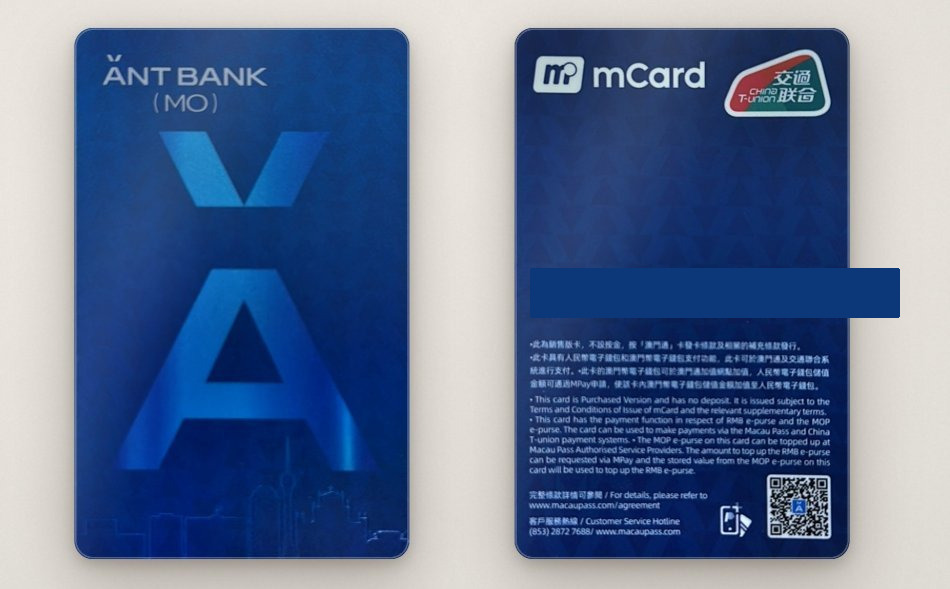
- Staff at the Rua de Pequim shop can walk you through the application. After opening, you may be able to collect a zero-issue-fee Ant Bank Macau Pass and gifts such as a shopping bag. A gold Macau Pass and some gifts may be available only at Galaxy.
- Following an in-store QR code, one report is a HK$50 rebate into the account.
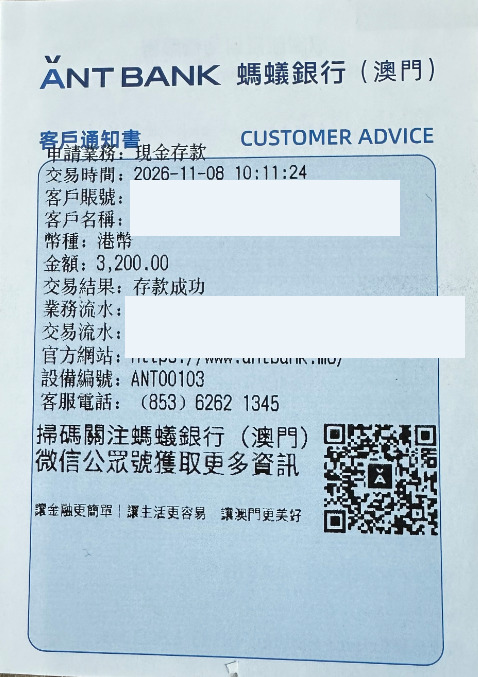
- After depositing HK$3,200 at the in-store ATM and moving it into an investment account, with assets kept at no less than HK$3,000, the reported outcome was two Alibaba shares after about 24 hours and two Xiaomi shares after about a month. Promotion rules change often, and third-party write-ups do not always agree on timing, net deposit or holding period. Whether the offer is still running, when shares are credited, and whether you must hold a balance for a set period, all follow the official app, in-store posters and terms. This guide does not include invitation codes.
- A Macau Pass can be topped up at convenience stores and often has local bus discounts. You can download Mpay and, at a nearby store, complete an identity upgrade (that visit reported an upgrade to 3B), then bind the pass and top it up by NFC. The card carries a China T-Union mark. One report is that, with a remaining balance, it can also be used on some mainland buses and metro lines; check what is actually accepted.
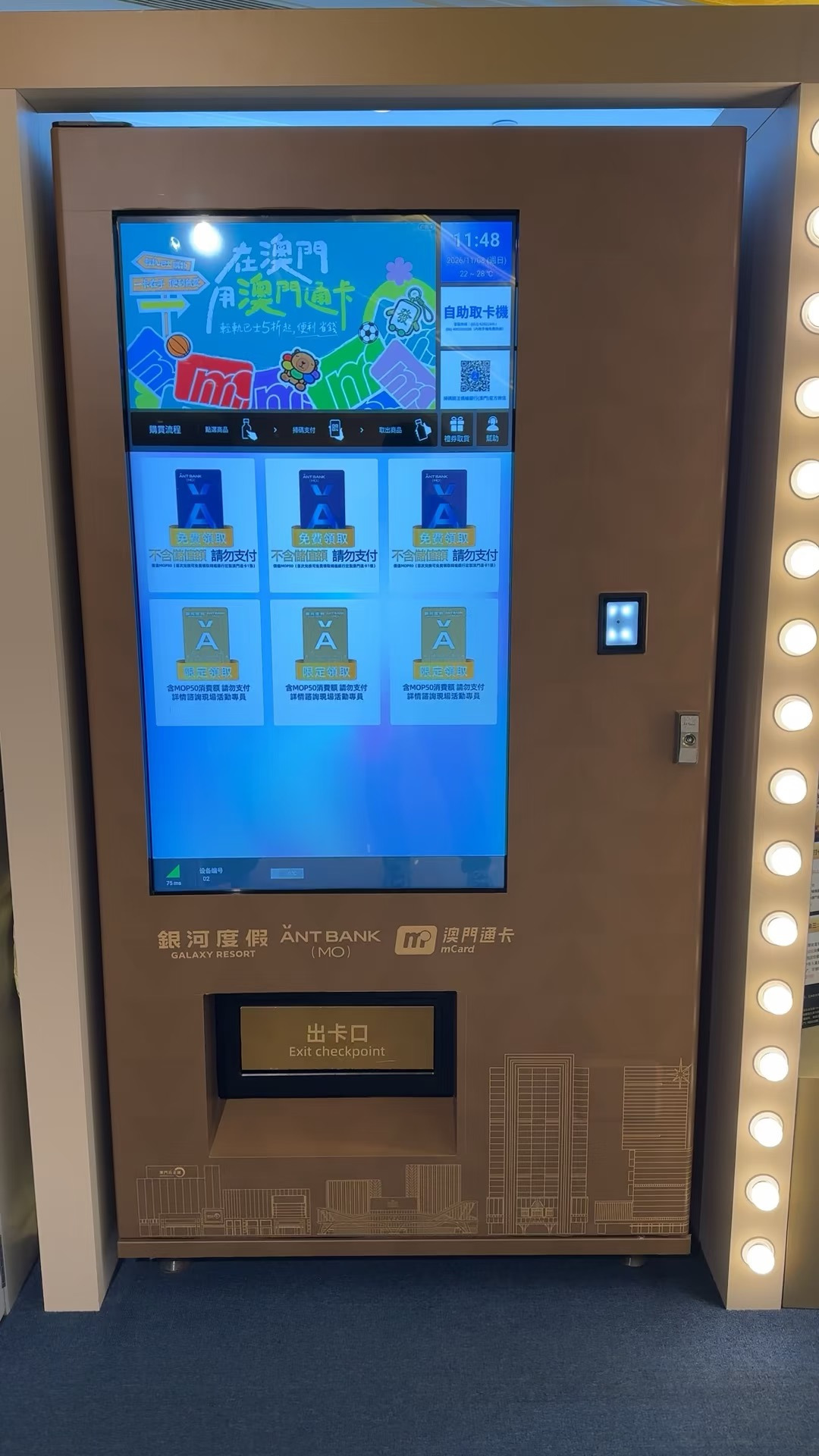
- At Galaxy, one report is a gold Macau Pass loaded with MOP 50, plus a notebook or shopping bag as an opening gift, subject to the on-site offer. There is a self-service card machine in the venue.
How to read this afterwards
- Traditional banks such as BOCHK, ICBC Asia and HSBC tend to review both the opening and later activity more closely. A long period of low balances and few transactions, or activity that looks like a pure funding bridge, can attract attention. If an account is restricted or frozen, you may have to visit a Hong Kong branch in person, sometimes more than once.
- Do not open every bank you can just to “collect” accounts. Each one can carry management, mailing, minimum-balance or investment-threshold costs.
- If an HSBC-style HK$100 monthly below-balance fee applies, and a sum has to sit in the account, decide first whether you will actually use the product.
- Virtual banks such as ZA Bank and Ant Bank (Hong Kong) are usually lighter to open, but fees and product range still follow their own terms.
- Fees, promotions and mailing rules change. The facts in this guide were checked on 11 November 2026 (Asia/Shanghai).
Carddoger takeaway
Get international calls, SMS and the entry/exit PDF working first, then decide which branches to visit that day.
On the reported mid-November 2026 trip, BOCHK and ICBC Asia were not opened: two neighbourhood BOCHK branches declined, and the online due-diligence check failed; ICBC Asia declined a tourist visit and a mobile appointment may lock you to that branch channel, which can block a later VTM attempt. CCB Asia opened successfully with an appointment. HSBC can be pre-applied inland and activated in the app after arrival, which saves time, but the official test is average TRB over the last three months, not a simple same-day balance of HK$10,000. Hang Seng can be opened online; allow for flaky NFC reads of the travel permit, and use the official tariff. ZA Bank and Ant Bank (Hong Kong) are reasonable first virtual-bank options; a Macau trip is mainly about Ant Bank (Macau)’s current welcome gifts and investment promotions, which should not be treated as permanent benefits.
Always follow each bank’s official website, app, tariff and the requirements given to you at the branch. This article is based on a mid-November 2026 reported user experience and official documents. It is not banking, investment, tax or legal advice, and it does not mean the same documents will get you the same account.
Official sources
- BOCHK: appointment to open a Hong Kong account
- ICBC (Asia): contact us
- CCB Asia: mobile / e-account opening
- HSBC Hong Kong Bank Tariff (effective 1 August 2026)
- Hang Seng: open an account on mobile
- Hang Seng personal service charges
- ZA Bank ZA Card
- Ant Bank (Hong Kong)
- Ant Bank (Macau)
- Guangzhou Public Security Bureau: how to obtain an entry/exit record (including the Immigration 12367 mini program)