Just Formed a US Company? Claim $22,300 in Startup Credits and Free Software
With your US company and bank account set up, claim Cloudflare $10,000, AWS up to $5,000, Azure $5,000, Google Cloud $2,000 and Supabase $300, even if you're bo
What this covers
Once your US company is formed and the business bank account is open, don't rush to pay for servers and software. The big providers all run startup programs, and several are open to bootstrapped companies with no funding. The five cloud credits below add up to about $22,300, plus free periods and discounts on popular software. Here are each program's official requirements, where to apply and the common reasons for rejection.
| Program | Credits | Best for | |---|---|---| | Cloudflare for Startups | $10,000 (1 year) | Bootstrapped or under $1M raised | | AWS Activate Founders | $1,000 to start, up to $5,000 | Self-funded, pre-Series B | | Microsoft for Startups | $200, then $5,000 after business verification | Startups with their own software product | | Google Cloud Start tier | $2,000 | Founded within 2 years, working MVP | | Supabase | $300 | Via Mercury Perks |
Before you start
- Get your company basics in place: a live website that explains the company, team and product, and an email on the same domain (e.g. you@yourstartup.com). Cloudflare, Google, ElevenLabs and Notion all reject personal Gmail or Outlook addresses.
- No empty sites: Google says it screens for sites with lots of AI-generated content, and placeholder or parked pages are rejected.
- Company LinkedIn / X / GitHub pages: Cloudflare requires a public social presence.
- Payment method: AWS, Azure, Google Cloud and Cloudflare all need a card on file and bill automatically when credits run out or expire, so set budget alerts.
- Most software perks come through Mercury Perks: Supabase $300, Notion 6 months, Linear 6 months, Workspace 25% off and QuickBooks 50% off are Mercury customer perks. If you bank elsewhere, Stripe Atlas, Brex and Ramp offer similar perks of different sizes.
- Every program is approved at the provider's discretion. Figures reflect the official pages as of November 2026 and may change.
Steps
1. Cloudflare for Startups: $10,000
The entry tier (Tier 3) is $10,000 with no funding requirement: bootstrapped or under $1M raised. Credits last one year and cover usage-based services like Workers, Workers AI, R2 (capped at $10,000), D1 and Pages. Three enterprise domains, DDoS protection, WAF and other core security features are included at no cost.
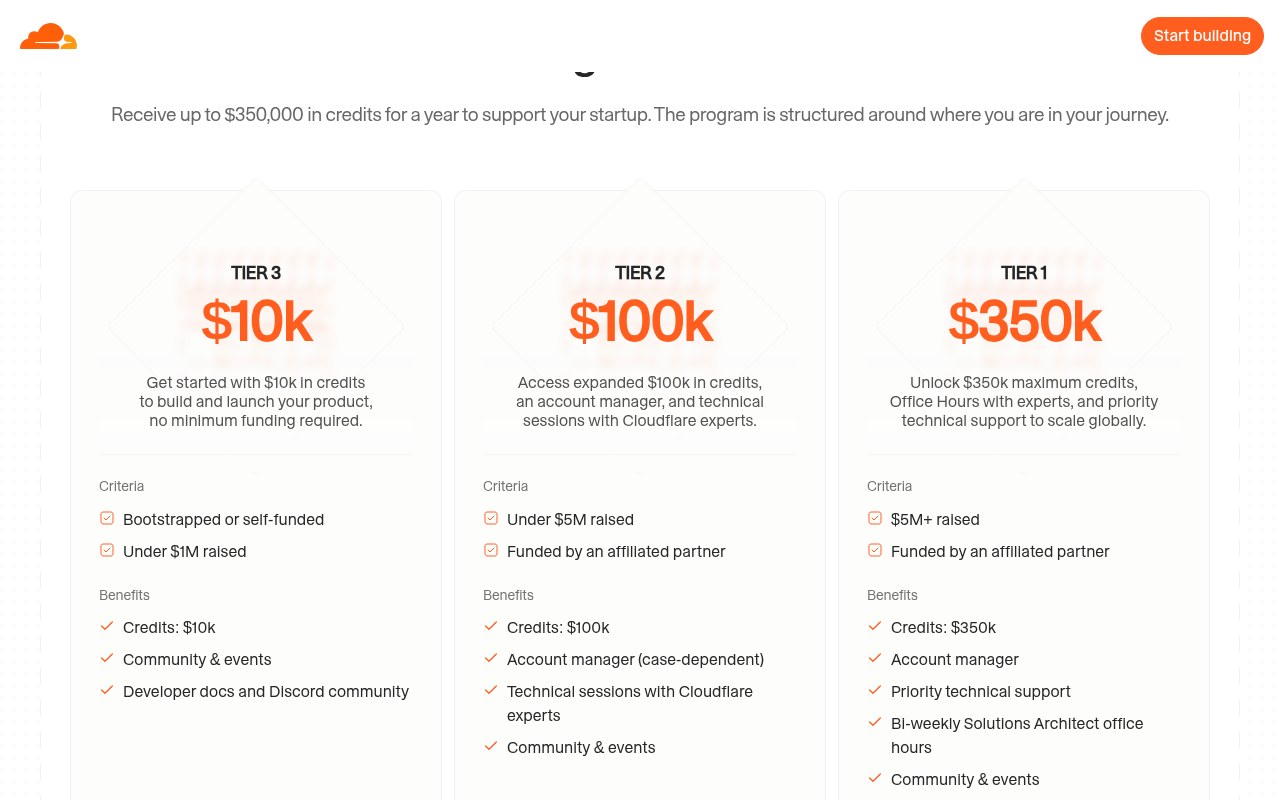
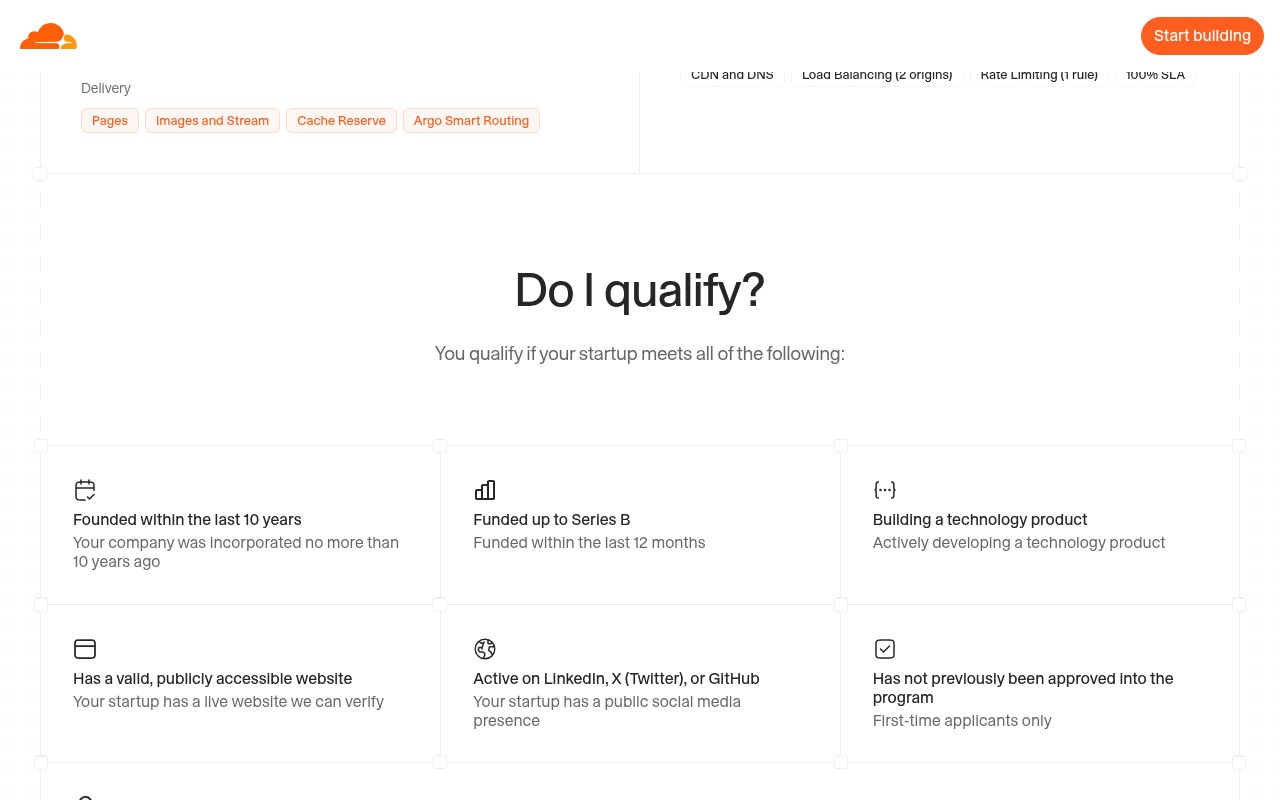
Requirements: founded within the last 10 years, building a technology product, a live public website, a company presence on LinkedIn, X or GitHub, first-time applicant, and a business email on your domain. Review usually takes up to 48 hours.
- Apply: cloudflare.com/forstartups
- Note: domain registration and AI Gateway aren't covered. Credits can't be extended and your card is billed after they expire. Consultancies, agencies and personal blogs aren't eligible.
2. AWS Activate Founders: up to $5,000
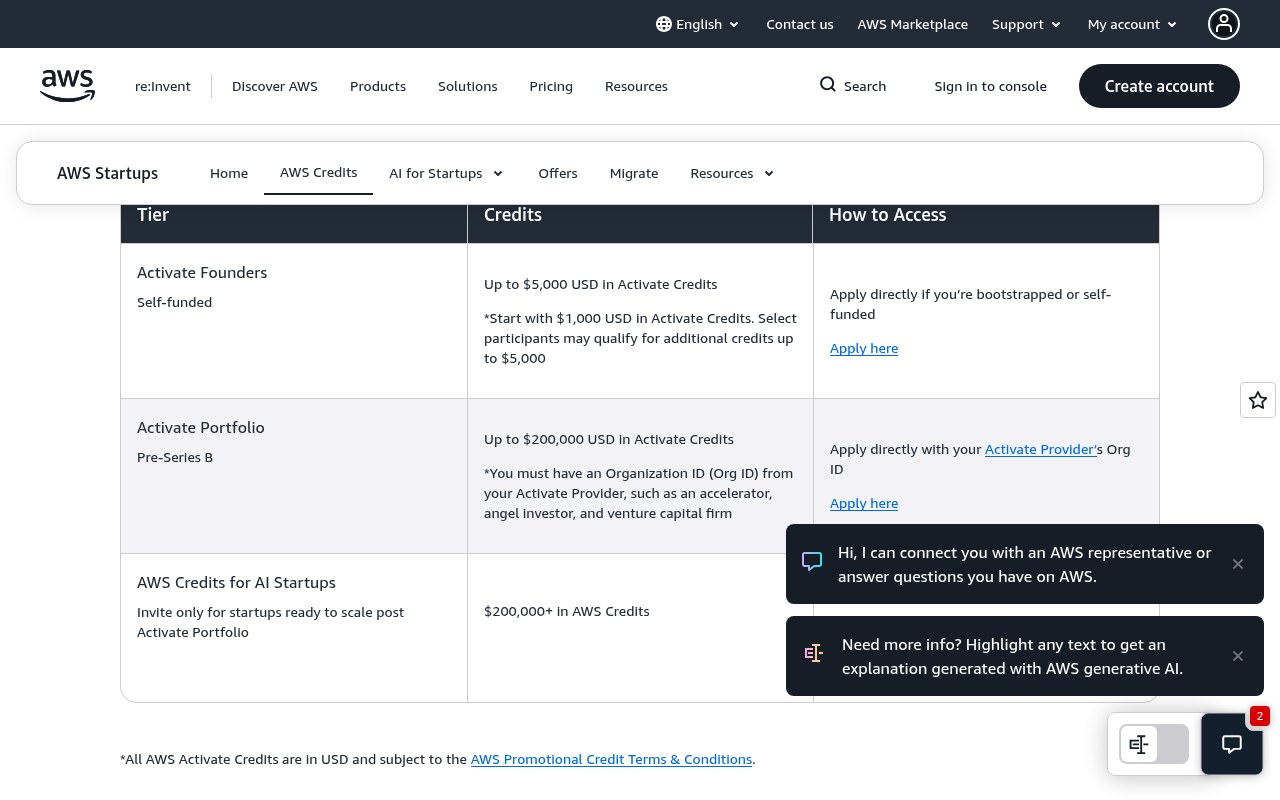
Self-funded startups apply for Activate Founders. AWS says you start with $1,000, and select participants may qualify for up to $5,000. VC- or accelerator-backed startups apply for Activate Portfolio with their provider's Org ID for up to $200,000. Basics: pre-Series B, founded in the last 10 years, and an AWS account on a paid plan.
Flow: create an AWS Builder ID with your work email → choose Founders → describe your product, funding stage and company → link your AWS account and submit. Expect a reply in 5–10 business days.
- Apply: aws.amazon.com/startups/credits
- Shortcut to $5,000: Mercury Perks lists AWS "$5k credits" for Mercury customers.
3. Microsoft for Startups (Azure): $5,000
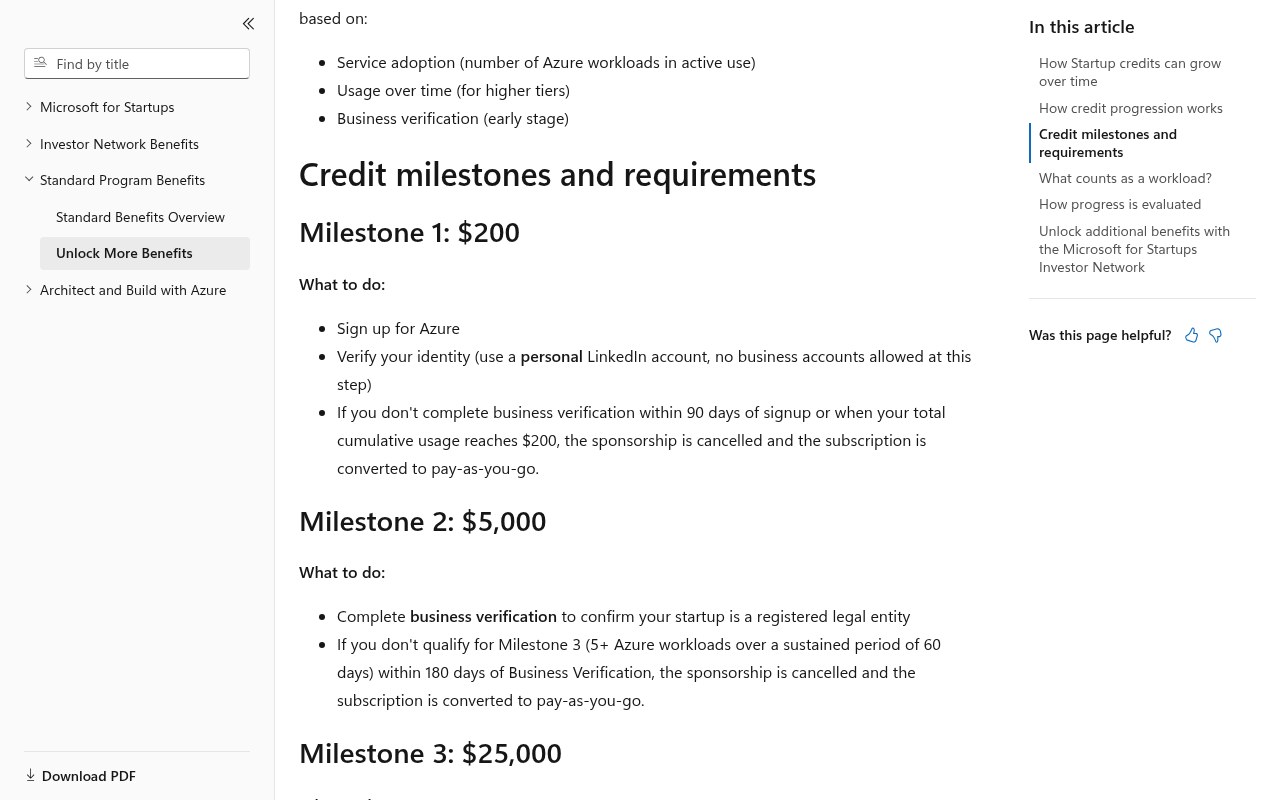
Credits now unlock by milestone. You get $200 on joining (identity verified with a personal LinkedIn). After business verification confirms you're a registered legal entity, it rises to $5,000. Running 5+ Azure workloads for about 60 days unlocks $25,000, up to $150,000.
- Apply: microsoft.com/startups; details on Microsoft Learn
- Eligibility: your own software product, privately held and for-profit, not Series C or later, not a consultancy, agency or school, no crypto mining.
- Key point: if you don't reach the next milestone (5+ workloads for 60 days) within 180 days of business verification, the sponsorship is cancelled and the subscription converts to pay-as-you-go. Actually use the $5,000.
4. Google for Startups Cloud Program Start tier: $2,000
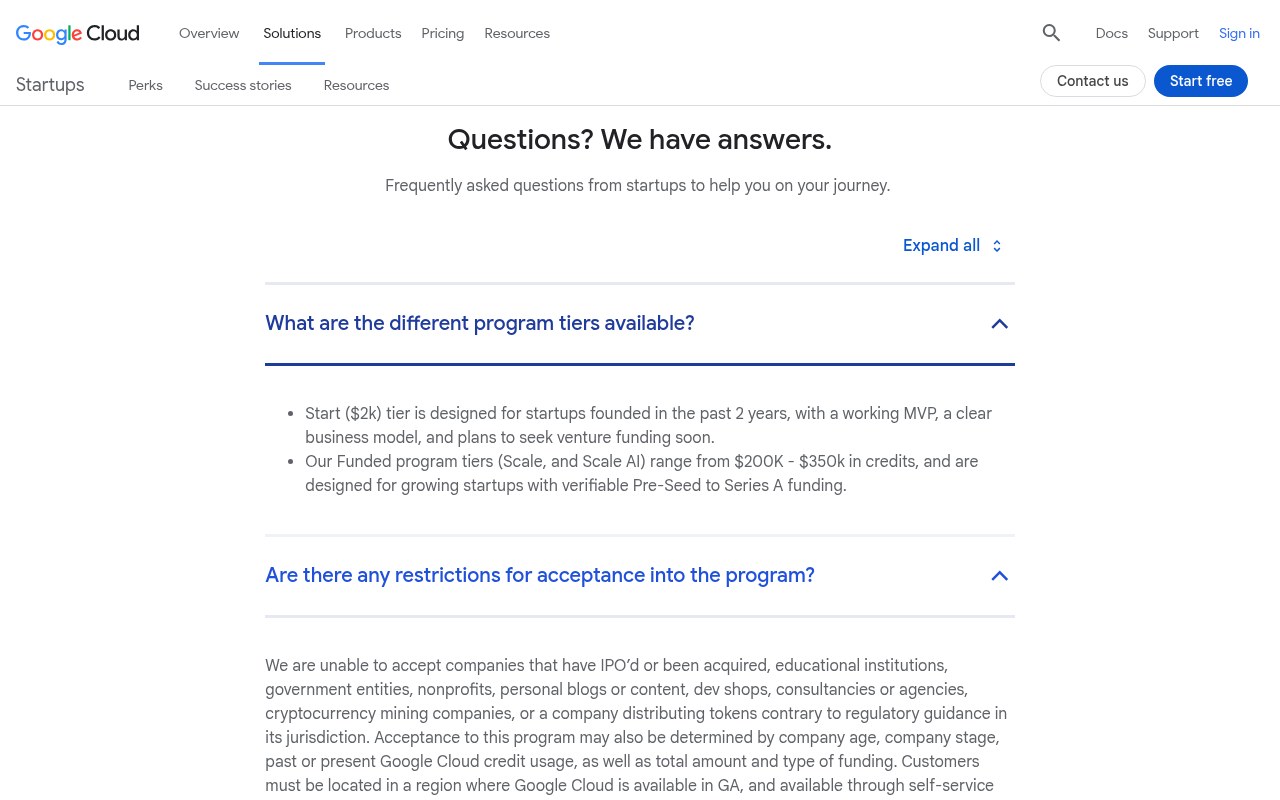
The Start tier is for startups founded in the past 2 years with a working MVP, a clear business model and plans to raise soon, and gives $2,000. Startups with verifiable institutional funding can apply for Scale ($200K–$350K).
Have ready:
- Your 18-character Google Cloud billing account ID (Console → Billing); credits land there;
- A business email whose domain matches your website, with the GCP and billing accounts administered by a user on that domain;
- A live website describing your company, team and product.
Decisions usually arrive by email in 5–7 days; check spam.
- Apply: cloud.google.com/startup
- Credits cover Google's own pay-as-you-go Cloud products only, not third-party models or Marketplace products.
5. Supabase: $300 (Mercury Perks)
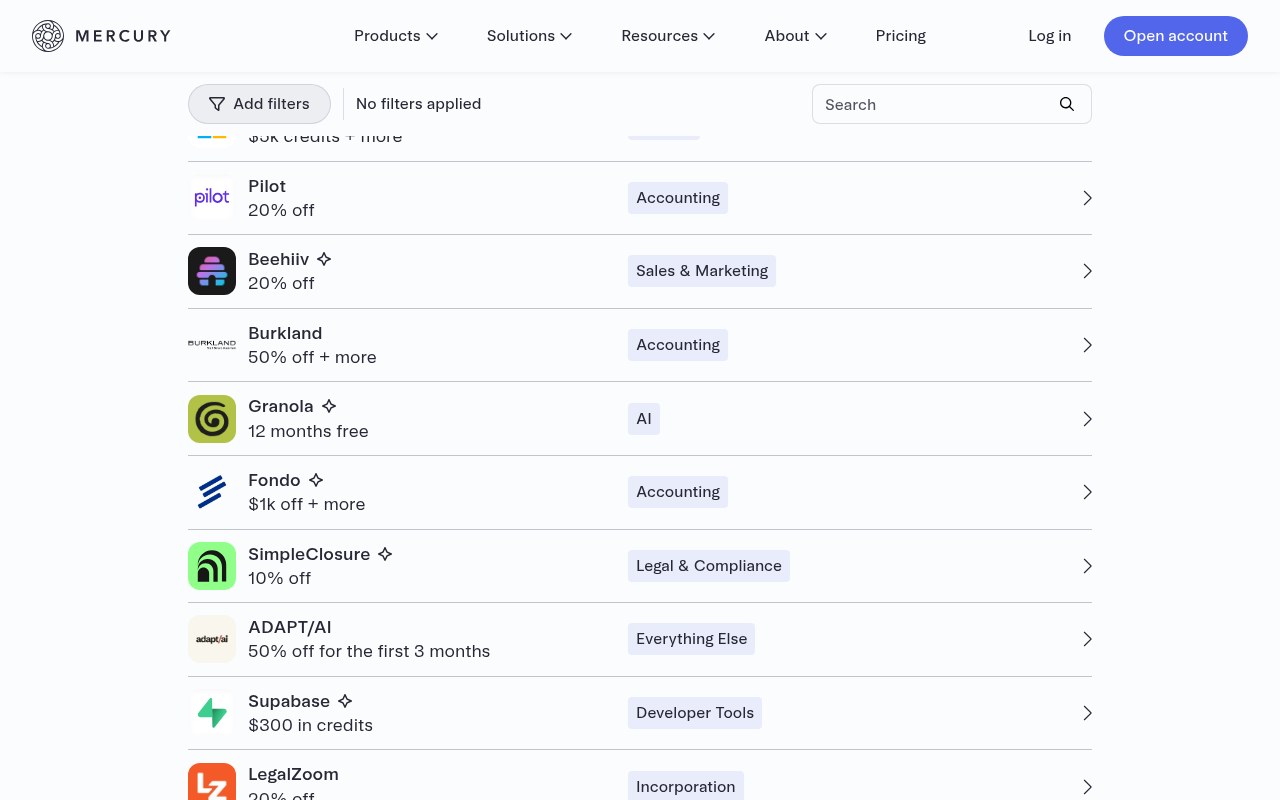
Supabase has no public self-serve credit application. The $300 credit is a Mercury Perk: log in to Mercury and redeem it on the Perks page. Stripe Atlas companies also get Supabase platform credits in the Atlas dashboard.
- Where: mercury.com/perks
6. ElevenLabs: 12 months free
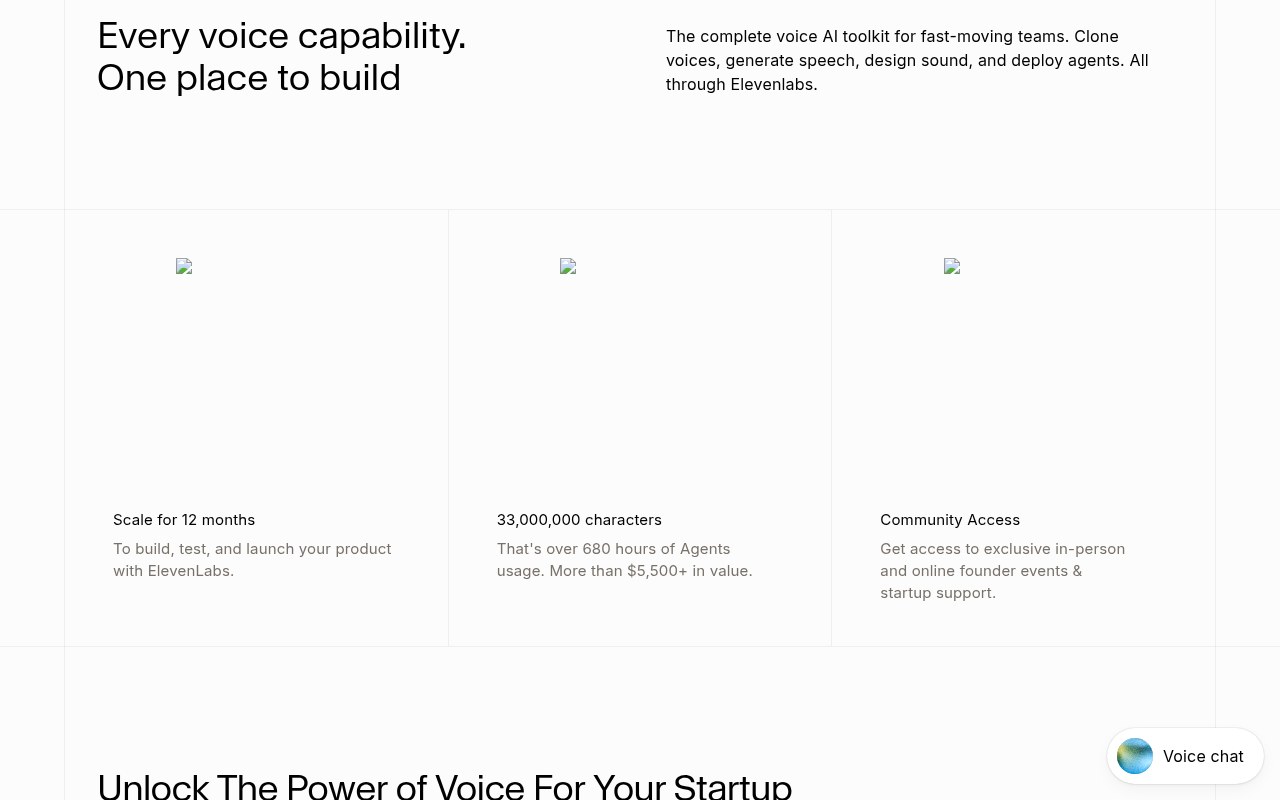
ElevenLabs Grants give startups 12 months of the Scale plan with 33 million characters (about 680 hours of Agents usage, over $5,500 in value by ElevenLabs' count). You hear back within a week.
- Apply: elevenlabs.io/startup-grants
- Requirements: business email, under 25 employees, a monetization plan; no agencies, consultancies or one-off projects. The plan reverts to Free when characters or the 12 months run out. Mercury Perks also lists ElevenLabs.
7. Notion: up to 6 months free
Notion's startup offer is the Business plan with Notion AI, in three lengths:
- 6 months: under 100 employees and affiliated with a Notion partner (Mercury is one);
- 3 months: under 100 employees with a real website and company email;
- 1 month: under 10 employees, or incomplete application details.
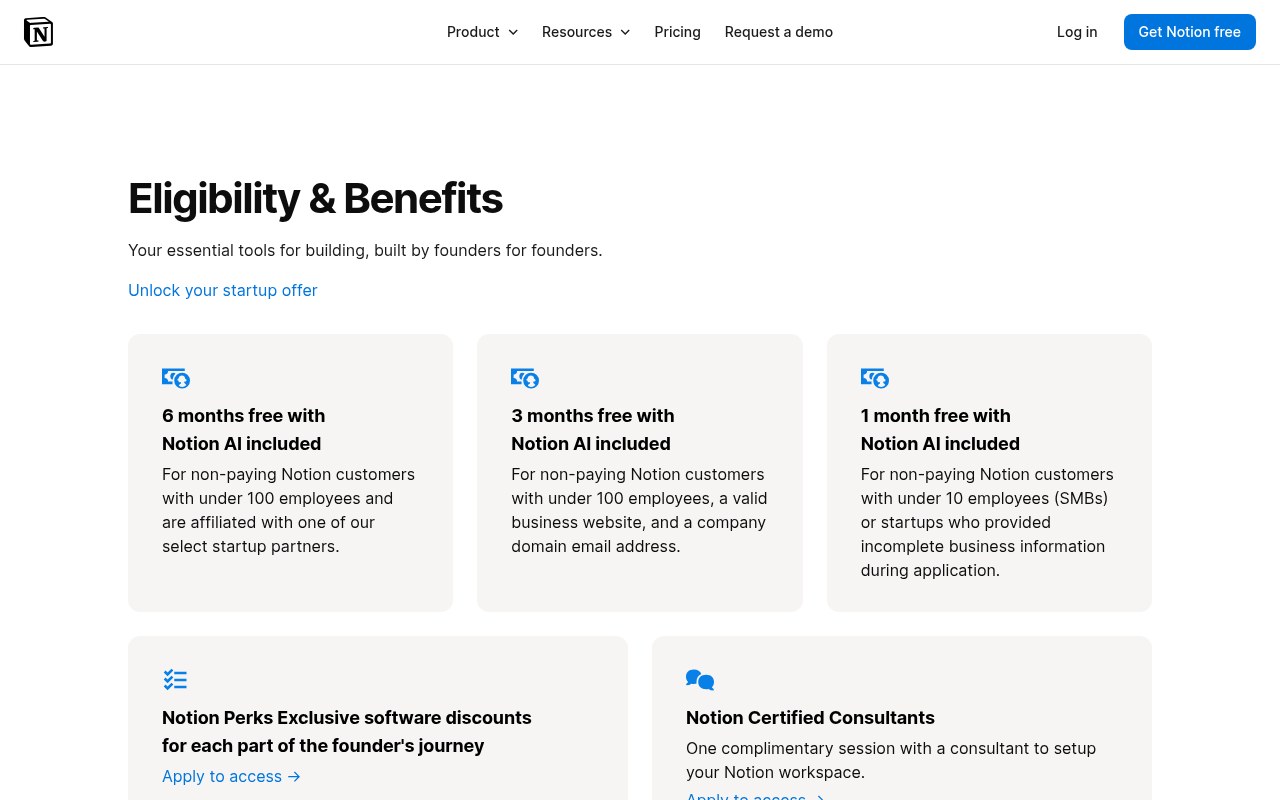
- Apply: notion.com/startups; Mercury customers get 6 months through Mercury Perks.
- Only for accounts that have never paid or used a Notion promotion.
8. Linear: 6 months free
Linear's startup program is only for companies affiliated with an official partner. The public list includes Mercury, Stripe Atlas, Brex, Ramp and Clerky. You need fewer than 50 employees and no prior paid plan, and must redeem via the partner link while signed in as a workspace admin.
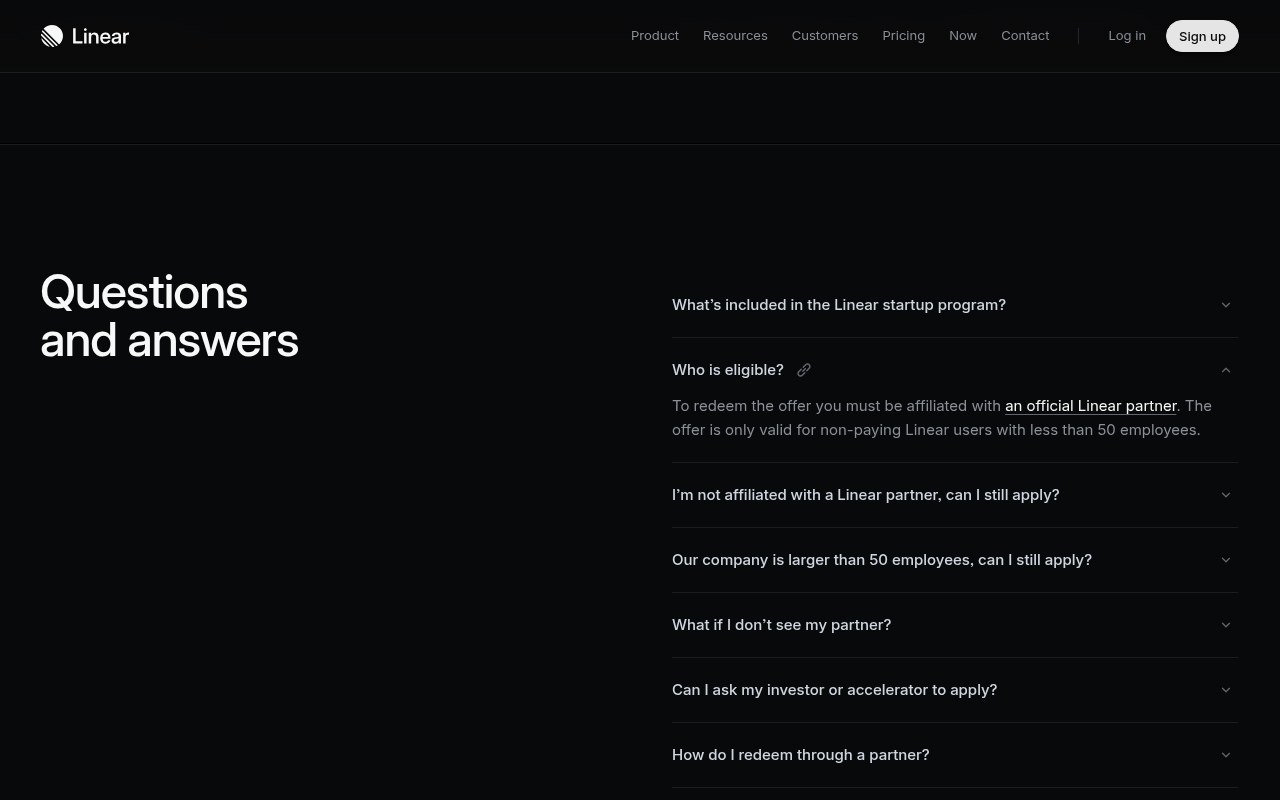
- Where: linear.app/startups; Mercury customers redeem "6 months free" in Mercury Perks.
- It renews at the standard price after the free period, so downgrade beforehand if you don't need it.
9. Google Workspace 25% off, QuickBooks 50% off
Both are in Mercury Perks: 25% off the first year of Google Workspace for new customers (Starter, Standard or Plus, up to 300 users), and 50% off QuickBooks Online.
- Heads-up: Google Cloud's Scale tier includes 12 months of free Workspace Business Plus, but only if your domain hasn't had a paid Workspace plan within 31 days, so don't let the two offers collide.
- Stripe Atlas versions are smaller: 20% off Workspace's first year and 30% off QuickBooks for 12 months.
Carddoger summary
After forming a US company, set up a real website and a domain email first; nearly every program requires them. Suggested order: apply for Cloudflare's $10,000 and Google Cloud Start's $2,000, which need no funding. AWS's self-funded tier starts at $1,000, while Mercury customers can go straight to the $5,000 offer. Azure's $5,000 needs business verification and real usage within 180 days. The Supabase, Notion, Linear, Workspace and QuickBooks deals mostly sit in Mercury Perks, so banking with Mercury saves effort. Every cloud program needs a card on file and bills automatically when credits expire or run out, so turn on budget alerts.